Quran memorization apps for kids: 5 we compared
Quran memorization apps for kids, compared: Naml, Quran Era, Thurayya, SABR and Tarteel. What each one does, what is free, and which fits your child.
6 min readBy the Tartīl team
In short
For a young child memorizing with a parent, our pick is Naml: it is built for a parent and child to practise together, every sūrah is free, and you can start in the browser with no account. If your child can recite alone and you want an app that listens, look at SABR or Tarteel. If your child cannot read Arabic yet, start with Quran Era.
- Naml is our pick for young children who memorize with a parent beside them.
- SABR and Tarteel listen to the reciter and cover the whole Qurʾān. They suit older children and teens.
- Quran Era teaches reading first. Thurayya is a wider first taste of Islam.
- No app replaces you. Five calm minutes a day, with you there, matter more than the app.
Many parents want their children to hold the Qurʾān in their hearts. Short sūrahs first, then more. An app can help with the hardest part: doing a little every day.
But the apps are very different. Some are games. Some are for adults. Some listen to you recite. We looked at five, side by side.
The five at a glance
| Naml | Quran Era | Thurayya | SABR | Tarteel | |
|---|---|---|---|---|---|
| Made for | A parent and child, together | Young children (and schools) | Children, in Arabic or English | Anyone memorizing | Anyone memorizing |
| Main goal | Memorizing the short sūrahs | Learning to read and tajwīd | Qurʾān and Islamic manners | Memorizing the whole Qurʾān | Memorizing the whole Qurʾān |
| How much of the Qurʾān | Al-Fātiḥa and Juz 30 (38 sūrahs) | — | Al-Ikhlāṣ and more | All 114 sūrahs | All 114 sūrahs |
| The parent's part | The parent leads and confirms each level | Home or school account | A parent area | — | Family plan |
| More than one child | Up to 3 children (Family plan) | — | — | — | Up to 5 accounts (Family plan) |
| Listens to the child recite | Not yet (planned) | — | — | Yes, word by word | Yes (mistake alerts are paid) |
| Brings sūrahs back for review | Yes, with set waits | — | — | Yes | Planning tools (paid) |
| Try it without installing | Yes, in the browser, no account | Games on the website | — | A short demo | App only |
| What is free | Everything, for one child | 7-day trial | Some parts | Everything (pay if you can) | A free plan |
| Ads | No ads | — | — | No ads | No ads |
A tick (✓) marks the app that is strongest on that row. A cross (✗) marks a real gap.
1. Naml: our pick for young children
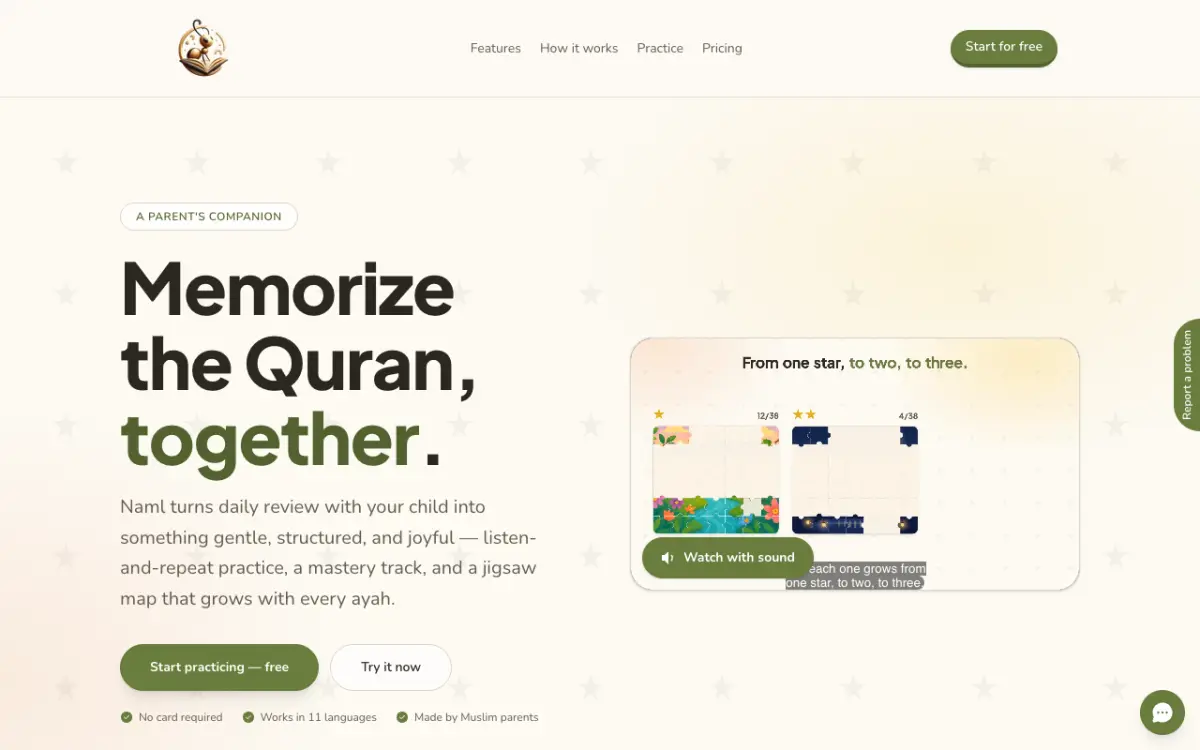
Naml is made for one thing: a parent and a child memorizing together. It says so on its first page.
Here is how it works:
- Add your child. Name, age, and what they already know.
- Pick a sūrah. Start with one they know, or a short one from Juz 30.
- Practise together. Each āyah has four steps: listen, recite along, recite alone, then master it.
Each sūrah has three levels: ★, ★★ and ★★★. Your child cannot rush them. After the first star there is a wait of 3 days, and after the second, 7 days. This brings the sūrah back after a break, which is how memory holds. And the app never moves your child up by itself. You press the button when you have heard them recite it.
Children see a jigsaw map. Each sūrah is a piece, and the picture grows as they learn.
Why we like it:
- It keeps the parent in the room. That is the most important part for a young child.
- The Qurʾān content is free. Every sūrah, its audio and translation are free. The Family plan adds more children and printable certificates, not more Qurʾān.
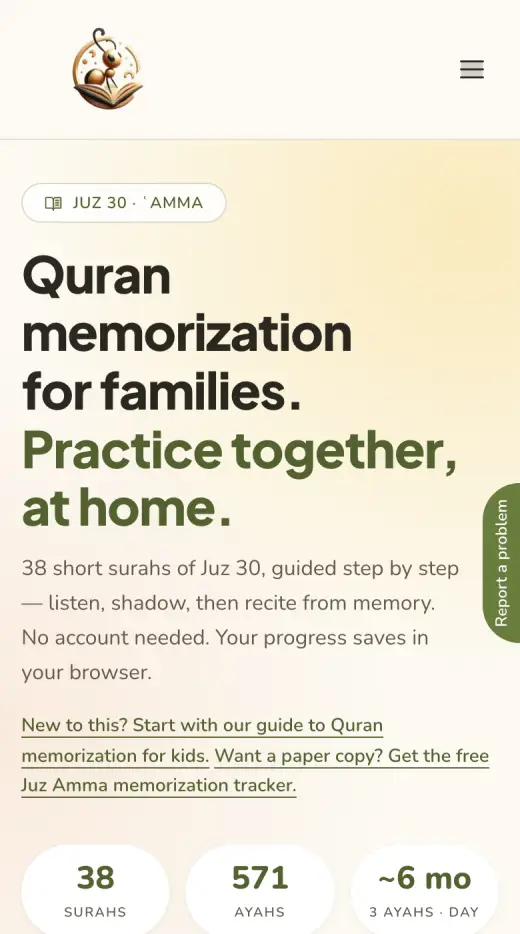
- You can start tonight. Open the practice page and choose a sūrah. No account is needed. Your progress stays in the browser.
- It speaks your language. The app works in 11 languages, among them Arabic, Persian, Urdu, Turkish and Indonesian. The Qurʾān text is always Arabic.
- No ads.
What it does not do yet: it covers Al-Fātiḥa and Juz 30 only, 38 sūrahs. The whole Qurʾān is planned. It also does not listen to your child yet; you are the listener. For a young child, we think that is a strength, not a weakness.
2. Quran Era: for children who cannot read Arabic yet
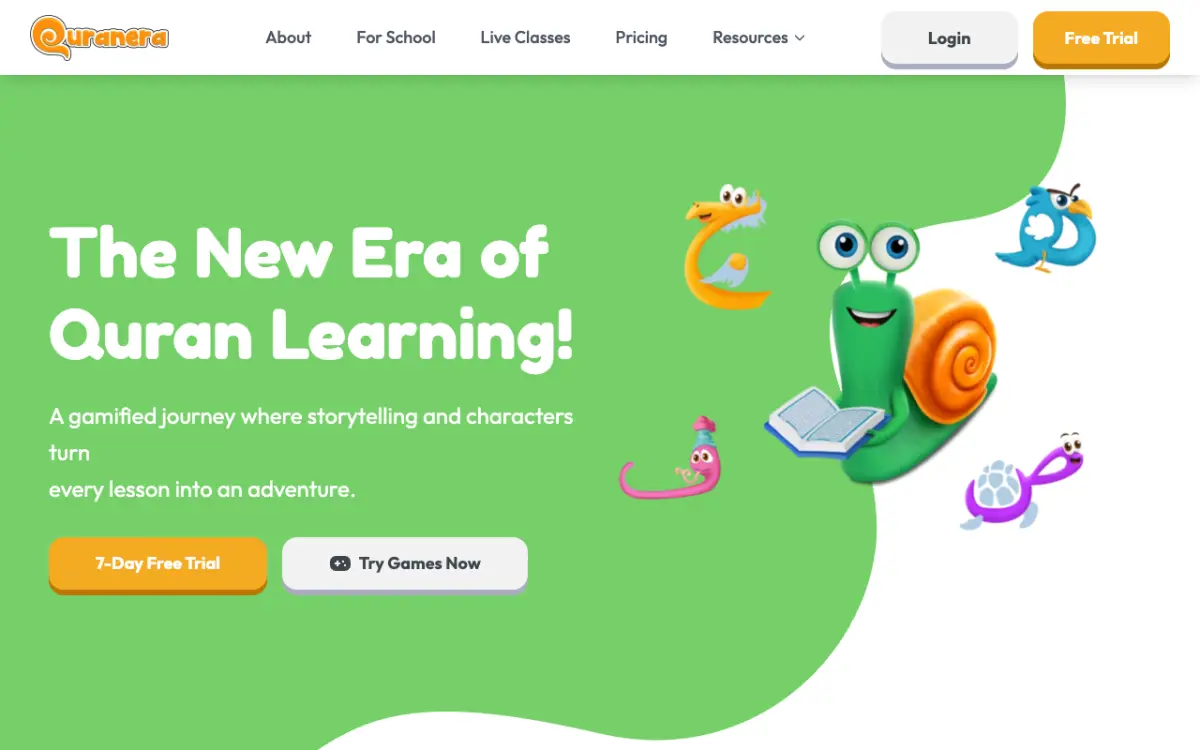
Quran Era teaches children to read the Qurʾān. Each Arabic letter is a cartoon character, and tajwīd rules come as short stories. There are games and live classes, and a version for schools.
It is a good first step before memorizing, for a child who does not know the letters yet. It offers a 7-day free trial. It is not mainly a memorizing tool.
3. Thurayya: a wider first taste
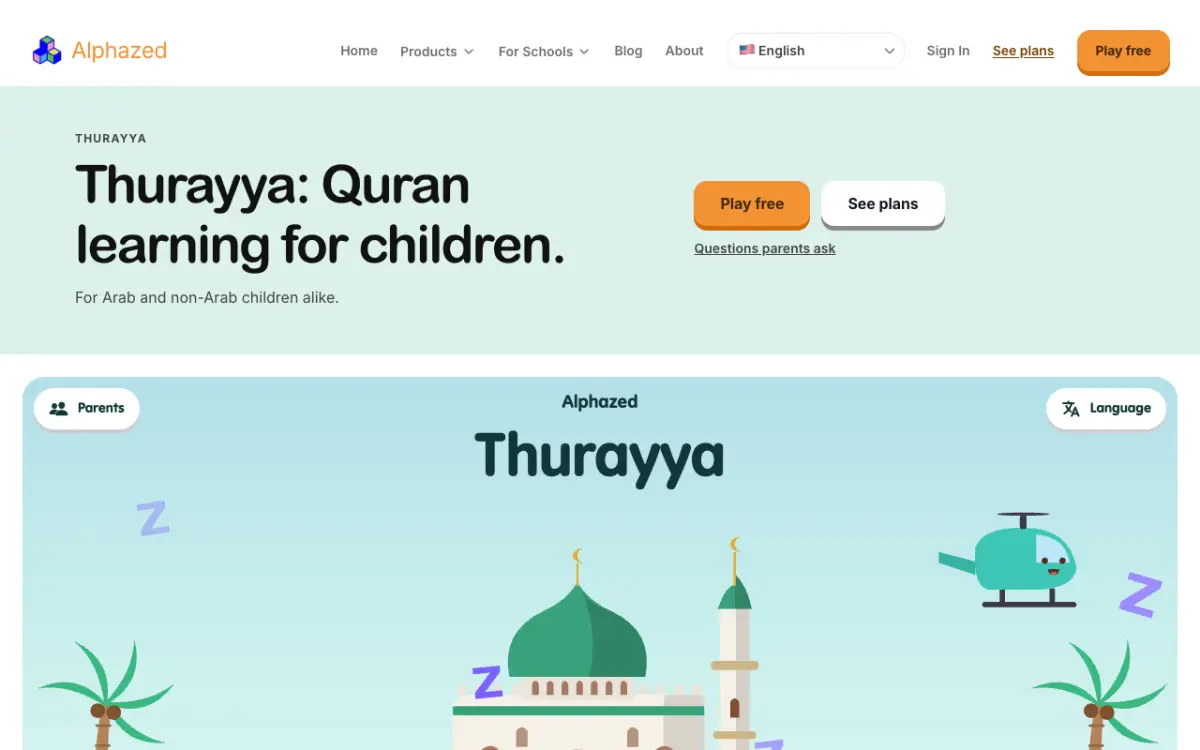
Thurayya is from Alphazed, the makers of the Amal Arabic app. It works in Arabic or English. Children explore sūrat al-Ikhlāṣ, greetings, kindness, hadith and the five pillars, in playful places.
It is a gentle start for a small child. It is not a memorizing plan. Some parts need a paid plan, and the prices are shown inside the app.
4. SABR: for older children who recite alone

SABR covers all 114 sūrahs. It listens while you recite and follows you word by word. It brings sūrahs back at the right time for review, and has daily goals and streaks.
Its pricing is unusual: every feature is open to everyone. You pay if you can, and if you cannot, you use it free. There are no ads. The app is in English, French and Arabic.
It suits an older child or a teen who can sit with a phone and recite alone.
5. Tarteel: for teens and parents
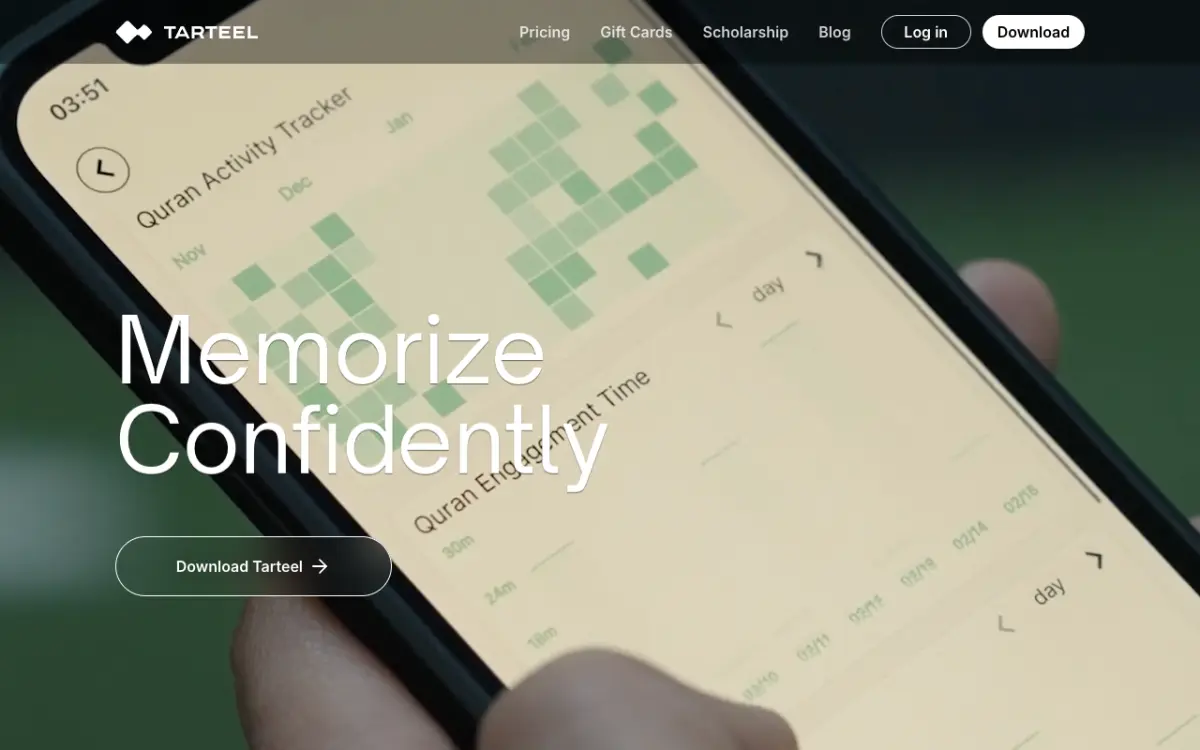
Tarteel is the best-known memorizing app. It listens as you recite and follows along. Its Premium plan alerts you to missed, wrong or skipped words, and helps you plan. A Family plan covers 5 accounts. The free plan has no ads.
It is made for anyone memorizing, not for small children. It is a strong choice for a teen, or for you, the parent, memorizing beside your child.
How to choose
- Your child is young and you will sit with them: Naml.
- Your child cannot read the Arabic letters yet: Quran Era first, then a memorizing app.
- You want a gentle first taste of Islam for a small child: Thurayya.
- Your child is older and recites alone: SABR or Tarteel.
- You want to memorize too: Tarteel or SABR for you, Naml for your child.
Tips that work with any app
- Keep it short. Five calm minutes a day is better than one long hour a week.
- Same time, same place. After a prayer or before sleep works for many families.
- Listen before you recite. Let your child hear the āyah many times first.
- Go back often. A sūrah learned last month needs a visit this week.
- Be there. An app can play the audio. Only you can smile when your child gets it right.
Questions parents ask
What is the best Quran memorization app for young kids?
For a young child who memorizes with a parent, we recommend Naml. It keeps the parent in charge, every sūrah is free, and it runs in the browser. For an older child who recites alone, SABR or Tarteel can listen and correct.
Is there a free app to help my child memorize the Qurʾān?
Yes. In Naml, every sūrah is free for one child. In SABR, every feature is free if you cannot pay. Tarteel has a free plan without its mistake alerts.
Which apps listen to my child recite?
SABR and Tarteel listen and follow the recitation word by word. Naml does not listen yet; the parent is the listener.
How long does it take a child to memorize Juz 30?
Al-Fātiḥa and Juz 30 together have 571 āyahs. At three āyahs a day, that is about six months, with review on top. Every child is different, so go at your child's pace.
Can an app replace a Qurʾān teacher?
No. An app helps you practise every day. A teacher hears mistakes an app can miss and corrects how letters are said. Use both if you can.